Wednesday, November 7, 2012

Matthew 1:18-19 - Marriage, Divorce, Bastards, and Jesus' first lesson

***Preface/Warning***
Some of the material in this post may be too spiritually mature for some audiences.  The information in this post is meant to add meaning to the each person's relationship with God.  It is not in any way meant to *change* a person's relationship with God or their convictions.  Many of the things said in this post are Pre-Christ and not reflective of current church or religious beliefs.  There is subject matter dealing with pre-marital sex.  I want to be forward and say that I am not an advocate of pre-marital sex.  The vulnerable audience to this post may be Single Christian Males.  It is VERY important that if you are in this demographic that you hold onto the teachings of the new testament and what gets you closer to god.  Do not take anything from this post as doctrine.  It is merely background story to build a better foundation.


Introduction:
In this section, I am going to cover four things that may be hard to swallow:

  • Laws for marriage
  • Laws for pre-marital sex and out-of-wedlock babies
  • Laws for Divorce
  • Jesus teaches us his first lesson.


Matthew 1:18-19 

"This is how the birth of Jesus the Messiah came about: His mother Mary was pledged to be married to Joseph, but before they came together, she was found to be pregnant through the Holy Spirit. Because Joseph her husband was faithful to the law, and yet did not want to expose her to public disgrace, he had in mind to divorce her quietly."

There is a lot behind these scriptures.  Not as much as the genealogy list (gratefully), however now we get to see what it looked like to get married and divorced at that time.  

Quickly, I will put down the silly notions of what I believ-ED of marriage at that time, based on this scripture and my background in church:

  • Marriage was an act similar to purchasing property.  It was very important that a woman was a virgin (Mary or not) prior to marriage.  Fathers kept their girls locked up until they were pledged to be married.
  • Joseph was divorcing Mary because he was ashamed of her.  


First, Let's look at Marriage:

Shawn Wooten did a great job of defining a Marriage with Jesus in this lesson:
http://www.seattlechurchofchrist.org/2010/08/15/shawn-wooten-fan-into-flame/

It is a very good message and I would highly advise listening to it.  In the lesson he talks about the "marriage process" in that time, and correlates it to our marriage with Jesus.  When I first approached this Matthew study, I intended to use this lesson as an example of the Marriage process in Jesus time.


At the bride's house the young man would do three very important things:-
  • He would make a covenant with the bride - an actual contract.
  •  He would drink a cup of wine with her which sealed the contract.
  • He would pay a price for her. 
  • He was going to leave her for a long time and go back to his father's house. He was going to build a bridal chamber for her, a place where they would have their first coming together in marriage (modern honeymoon)
  • The groom would have to finish the chamber and have it approved by his father. 
  • During this time the bride waited with dignity. She would wear her veil whenever she went out, in order that some other young man would not try to initiate a contract with her
  • It was an "abduction". The bride was "stolen" from her house. She would be waiting with her bridesmaids and her sisters and whoever she wanted to take in the wedding party with her, and they would all have oil in their lamps in case the groom did choose to come at night. 

It is a great lesson for current studies.  Unfortunately, I found a flaw with using it to reference my studies.  It's not true.  It references the lessons of Jesus and New Testament scriptures.  The problem is that the New Testament did not exist at the time of Mary and Joseph's marriage. Correlating what a Jewish marriage should look like to our marriage with Christ to explain Joseph and Mary's wedding is flawed:  Jesus and the new testament are not available to me to use...as they didn't exist at the time of Joseph and Mary.  

Shortly after realizing this; I came across the very lesson that he taught online:
http://www.biblebelievers.org.au/marriage.htm

So I am now at a point in which I realize that I am going to have to reset my research method.  But have no fear, I now have a new tool at my disposal that I had never previously used before.  If I want to look at the ceremony and process of marriage and divorce, I should go straight to the source and read the same requirements that Mary and Joseph knew:  That of the Talmud.  For more information, see my post about hebrew texts HERE. 

Gratefully the Talmud has a vast amount of rules and regulations for marriage and divorce that we can use to identify the real issues in that time.

...and oddly enough, the Jewish law is probably more liberal than you would believe.  Christians tend to make Jewish marriage sound stuffy and drab and lacking in love.  Surprisingly, there are fewer rules and requirements in the Talmud for marriage than there are in modern Christian churches.

Here are some important notes about Marriage.  You may find some inconsistencies with what you currently believe marriage looked like in their time:

  • There are 2 stages of Marriage:
    • Shidukhin (Engagement)
    • Badekin (Ceremony):  Contains the following elements:
      • Kiddushin (Sanctification) which is the betrothal 
      • Nissu'in: The actual ceremony
  • The woman stays with Parents up until the actual ceremony.
  • A woman is given 3 ways to begin the Shidukhin process:
    • Money
      • Mishnah states at least a copper coin
      • It is a gift.  You are not purchasing the bride.  To purchase a bride implies that the bride can be re-sold and has a given value.
      • The gift is a dowlry, not a "price".
    • Contract
      • A contract gets written that the Husband will financially support the bride.
        • enough bread for at least 2 meals a day
        • sufficient oil for cooking and for lighting purposes
        • sufficient wood for cooking
        • fruits and vegetables
        • wine, if it is customary in the locality
        • three meals on each shabbat
        • a silver coin each week
    • Sexual intercourse
      • The man and woman must meet sexually at least once prior to marriage.  If either one is repulsed then the marriage is forbidden.
      • Sex is no different than hunger or thirst or other basic instincts.  It is important to fulfill, but should be controlled.
      • A man "spilling his seed" anywhere other than the intended place is guilty of breaking the law and severely punished by God.  They reference Onan to reinforce this law.  That is why it is important to get married and important to be attracted to your wife.
Reference


Here are some important points:
  • Normally all 3 ways are satisfied prior to marriage (even the sex), however only one is necessary.
  • A woman can only be acquired with her consent.  (Kiddushin 2b v7)  There are no forced marriages under the law.
  • Husband must provide wife with food, clothing and sex as well as anything else in the contract.
  • Sexual relations are not a man's right.  They are the women's right, and her satisfaction is required.
  • Up to 1000AD, a man can marry more than one wife.  Polygamy was not common, however it was not looked down upon.  No rabbis were mentioned to have more than one wife.  Even After Jesus' ministry, Polygamists were not looked down upon.  The only rule about polygamy is towards Church leaders; which was to keep in track of Rabbi's at that time.
  • Women's property remains her property, however the man now "manages" it.
So looking at this, it free's up a lot of "Stifled" feelings surrounding marriage.  It is more than likely that most marriages were out of love.  They were not "Property purchases" that involve trading cows and a depressed bride as many people try to make it sound.  It is also quite possible that it was more like today, in which Bride/Bridegroom saw each other several times during synagogue, shopping, work, etc.  Nobody was barred from seeing each other during the marriage process.

Sex in the Jewish law:
This article will state how the Jews percieve sex better than I can:
http://www.jewfaq.org/sex.htm
-I would definately consider reading it, as it is quite interesting to compare Jewish laws in Talmudic times to current times.


Children born out of wedlock:
I have historically known children to be born out of wedlock to be called bastards.  In fact, I think that is the first thing I knew about Jesus is that he was a bastard.  Sounds very demeaning, doesn't it?  It feels demeaning to type out.  The fact of the matter is that children born out of wedlock in the Talmud are not bastards.  They are not frowned upon by society or the law the way they are in modern days.  

In Modern days there is a taboo for children born out of wedlock.  Whether it is admitted or not, culture has a distaste and judgement for parents of children born out of wedlock and a "sadness" for the children themselves.

Under Talmudic law, the only "bastard" (or mamserim) is when a child is born from an illegal marriage or adulterous partner.  A child born out of wedlock has no taboo as a bastard.  If mom has sex with another partner, then that child is a mamserim.  But if a man and a woman have a child out of wedlock, it is not a mamserim.  Despite modern belief, Joseph and Mary had nothing to hide if they had concieved the child prior to marriage.

This is an important point.  If Jesus were a regular baby brought about by pre-marital sex then neither the rabbi's, the culture, Joseph, Mary, or their friends and family would not have any "social norm" problem with it.  Joseph was not divorcing Mary to save face because he was afraid.  *If* they did conceive the baby prior to marriage, it wouldn't have been looked down upon.  This is a modern church misconception. 

So the big question...Why did he choose to try to divorce her?

Lets look at the reasons for divorce...

Divorce:
Let's look at what the Talmud says about divorce.  Fasten your seat belts because it is probably a bit different than you expected:
  • Under Jewish law, a man can divorce his wife for any reason or no reason at all.  He can divorce her because she spoiled his dinner or because he finds another woman more attractive.
  • A woman's consent is not required in a divorce
  • If a woman commits adultry, a man is REQUIRED to divorce her, even if he forgives her. Even if they work things out, their marriage is now illegal.
  • A man is required to pay a large severance package to the wife when he divorces her. 
  • A man can not re-marry his ex-wife if she has remarried.
  • Divorce is completed by a husband handing his wife a bill of divorce (sefer k'ritut) and sending her on her way.
  • It is not required for the husband to hand the bill to his wife.  He can have a messenger do it.
  • Only the husband can initiate a divorce.
  • Rabbis and the court can require a husband to divorce his wife:
    • If a husband is physically repulsive 
    • If he violates his obligations (food, clothing, sex)
    • If there is sexual incompatibility
Note that the wife still doesn't initiate the divorce, but the court forces the husband to divorce her.  The woman can not initiate a divorce.

There is one outlying issue with the rabbinic laws of marriage.  If the husband disappears.  If he deserts his wife there is no way for him to initiate a divorce which leaves the wife "anchored" (agunah).  The court can not let her remarry because the husband may return some day.  To this day it has not been resolved.

What does this all mean?
Take a minute and look at the highlighted points.  This will help us understand the scriptures much more.
  • Joseph and Mary is a love story.  They loved and cared for each other very much.
  • Joseph still loved Mary and would probably continue to.
    • This is shown because he did not want her to face public disgrace.  
    • He still wanted to protect her and her reputation. 
  • Joseph was 100% convinced the baby was not his.
    • There are no laws against pre-marital sex.  
    • Joseph had NOTHING to hide if he and Mary had pre-marital sex and concieved the child.  
    • He was willing to stand by his conviction that the child was not his, despite no reason not to.
  • Joseph knew they would be forced to get a divorce.
    • "Joseph was faithful to the law..."  
    • He knew that the rabbi's would require them to get a divorce.  It was the law.  Even though he still loved Mary, he would be forced to divorce her.
    • In order for Joseph to "Please God" and "Get to Heaven" he had to follow the word of God.
  • Joseph was an honest and God fearing man
    • He could have very easily said, "OK, it is our baby" and there would be no issue...but that is a lie, and he would not lie in front of God.
    • He was dead-set on telling the truth and being pleasing to God in the best way he knew fit:  Following the law and being honest.
I make those points to show that Joseph is not a one-dimensional character in the bible who is shallow and just wanted to divorce his wife because he was angry at her.  That is the conception that I and so many people have of Joseph, and most likely it is not true.

Joseph was trying to do good by God by following the law of Moses that God himself allowed to be written to get to Heaven to divorce Mary.  It is what he was taught that God requires. He shows that he still loves her by protecting her from the public, but he still wants to do what God requires of him.  It is quite possible that he would even marry her and raise the child himself even if it wasn't his.   

...But he was a follower of God.  Unfortunately EVERYTHING that he knew of the law of God told him that if he wanted to get to heaven, he had to a) Do not lie and B)Divorce her.  I don't believe that he wanted to divorce her, but he had no choice.  He could either lie in front of God, or he could disobey the talmudic laws.  It was a double-edged sword.

Even before Jesus was born, he is causing conflict with the Rabbinic laws and changing people's idea of how God looked at them.  

The Takeaways:
1)We CAN NOT look at characters in the bible as one-dimensional figures.  They had real conflict and real struggles in Conviction.  I say again that I feel that every scripture in the new testament is there for a reason.  

2)If you walk your Christian Life in a way in which you do things "Because you were told to", or because "That is how it is written" you may fall into the same trap as many other people in the Bible.  God's #1 command is "Love God and Each other".  This is more important to him than anything written down. Joseph loved Mary and struggled with doing what the law told him to do and loving his wife.  What does God ultimately want?  Stay tuned for the next scripture...

We are 18 scriptures into the Gospel.  Jesus is still in the womb and hasn't been named.  Examine your own reactions to these scriptures.  They may be something like mine:  "Divorcing her is mean (even if it's the written way to get to God)", "loving her is good".  

...Jesus just preached his first sermon from the womb.  Did you hear it?  


Tuesday, November 6, 2012

Matthew 1:11-17 : Jesus' Lineage

Last Post, I talked about the period of Jesus' genealogy in which his ancestors were on the thrown.  There is a great deal of information about the majority of the Kings and There were a few Kings omitted.

This post we will be going over Jesus' geneology after the exile.  It is much easier and much shorter...you'll find out why in a minute.

Very Important Things that I learned here:

  • There is little to no information about Jesus' lineage during the exile.
  • I am no deep biblical scholar by any means, and I don't claim to be one.  It is refreshing to find out that I have come to the same conclusions as other historians and biblical scholars so far.  I find it interesting that others also have a hard time as to why Matthew omitted 4 generations of Jesus' lineage and also why Matthew feels it is important to add verse 17, which states the numbers of ancestors.  Us as the reader do not understand the meaning of the number 14.  Added to that, the number 14 is incorrect by my count, historians count, and even Matthew's count.  Why is this in the bible?

On to the Genealogy:
The following is the lineage of Jesus from the Exile of the Kingdom up to the new testament
  1. Shealtiel
  2. Zerubbabel
  3. Abihud
  4. Eliakim
  5. Azor
  6. Akim
  7. Elihud
  8. Eleazar
  9. Matthan
  10. Jacob
  11. Joseph & Mary
  12. Jesus
Last lesson, we left off with Jeconiah.  If you remember, Jeremiah cursed Jeconiah that none of his descendants would ever sit on the throne.  Technically, this is true as the Jews were exiled into the wilderness while Jeconiah was on the thrown.  There is question as to whether this also included Jesus.  The Jews believed that Jesus could not be the King because he was a descendant of Jeconiah.  But Jeremiah 23:5-6 mentions "a branch".  It is important to understand that Jesus was not Joseph's son, but was immaculately concieved.

Jeconiah's son was Shealtiel

  • Shealtiel
    • Luke lists him as a son of Neri.
    • There is conflict as to whether Shealtiel died prior to his son's birth.  It is possible that his son is actually his brother's son.  
    • Known for being a source of controversy in the genealogy of Jesus
  • Zerubbabel
    • Conflict as to whether hs was born to Shealtiel or Pedaiah.
    • Led the first group of jews with Joshua out of Babylon captivity
    • Laid groundwork for second temple.
  • Abihud
    • There is no documentation of Abihud, other than genealogy lists.
  • Eliakim
    • There is no documentation of Eliakim, other than genealogy lists.
  • Azor
    • There is no documentation of Azor, other than genealogy lists.
  • Zadok
    • There is no documentation of Zadok, other than genealogy lists.
  • Akim
    • There is no documentation of Akim, other than genealogy lists.
  • Elihud
    • There is no documentation of Elihud, other than genealogy lists.
  • Eleazar
    • There is no documentation of Eleazar, other than genealogy lists.
  • Matthan
    • There is no documentation of Matthan, other than genealogy lists.
  • Jacob
    • There is no documentation of Jacob, other than genealogy lists.
  • Joseph and Mary
    • We will cover them in the next post.

This part of the genealogy is hard for me to swallow.  There is nothing in jewish, christian or islamic texts for this period.  It is hard for me because these people were obviously important enough to have their names put down, but there is nothing about them.  The Midrash is a living document to outline the plight of the Jewish nation, however there is no documentation in there, either.

Unfortunately, this time period opens up possible floodgates for skeptics.  I don't like that as I support the bible as God-inspired, but unfortunately I really don't have any argument against any skepticism in this area.  I am however, going to give this period the benefit of the doubt.  I am quite sure that while in this period, there was very little written documentation since they were exiled.  Here is my argument:
-If our generation crumbled right now and very few people survived, 1000 years from now it would be very difficult to document the way our life was.  Without access to computers, it would be very difficult for future kingdoms to figure out who we were as people.  I try to put the exile in sort of the same way.  They were living in the wild and they probably only had the bare minimum of documentation:  The Census.


Matthew 1:17
"Thus there were fourteen generations in all from Abraham to David, fourteen from David to the exile to Babylon, and fourteen from the exile to the Messiah."
  • Unfortunately, this isn't true.  I would like to know how to interpret this statement.  
  • I think that this is an interesting scripture that was added into this book.  Did Matthew believe there was special significance with these numbers that has no historical or religious backing that would prove Jesus is a messiah?
Here is an article written about this:
Sadly, the article tries explaining things away by talking about moon cycles and calendar years.  The fact remains that we are not talking about calendar dates here,  we are talking about generations of people.  A generation number doesn't change because of the time of a lunar month.

This has caused me to open up a separate post about "Ongoing Questions".  Hopefully, I can find some answers from other people based on that blog post.


Matthew 1:6-11 : Jesus' Lineage

Last time I posted, we covered the introduction of Jewish documents to explain situations that could not be explained by the bible.  If this is your first time here and you are confused by that, please go back to my previous post for explanation.

As a preface, I am going to say that I have historically had a hard time with this portion of the bible.  Whenever I attempt to read it, I sense that it is just King after King sometimes pleasing god, sometimes angering God, war, fighting, and they all start to sound the same after a while.  I am going to make a concerted effort to avoid delivering this to you and try to keep in line with the Geneology teaching.

I am going to keep this section brief.  It is not my desire to restate what the bible says about the Kings.  If you want you can go to the bible to get that information.  My goal is to just provide information that is previously unknown or misunderstood so that we have a deeper understanding of Jesus.


Very Important Things that I learned here that are taught incorrectly in modern church:
  • Davids Kingdom was very strong, however there was conflict in it.  2 of the 12 tribes did not agree with the way things were done.  The Kingdom split and they remained at war with each other.  The reason for this ultimately was because of increased taxes.  This division could have easily been averted by the king at the time, however he chose not to.  After that point  there is eternal conflict even after the wars end.  This relationship is poisoned for eternity on the 2 parties.
  • It is easy to see why the Jews use their Kingdom as their standard for what the Kingdom of God is to look like.  It was created by God and the prophets all told them that they deserved the Kingdom.  Why should God's vision of his kingdom change?
  • Matthew's Genealogy list is missing 4 ancestors of Jesus.  There is plenty of documentation on them AS THEY WERE KINGS, however they are not in the lineage trace in Matthew.  3 of them are in a row, and one is a bit later.  I am still trying to figure out what happened there.
  • In this section of Geneology, all ancestors are Kings.  This is important to note for leading up to Jesus being the next King of the Jews in the "New Kingdom".  He was lined up to be the King, however he did not meet the expectations that the Jewish leaders had at that time for him to be King.  Their expectations were their Kingdom and King David.  It is important to note that the Jews were expecting to return to the Kingdom and reclaim it.  Jesus was talking about a different Kingdom.  If you look at it from the Jews perspective, you can understand the social friction and animosity towards somebody who just claims they are going to be your King, and the new Kingdom is different than what God has told you.  Especially when  your Standard of the kingdom is the Kingdom of David, and your standard of a King is David.  
  • There is a ruling "Queen" of a Jewish nation.  It was a very dark time and I am sure that is the reason it was left out of the geneology.
  • We see our first "Divergence" between Islam and Judaism.  Christianity does not exist in this Gospel study.  
  • You will see that the Holy Spirit does not stick to one person.  It comes and goes as Gods' will needs to be completed.
On to the Genealogy:
This is the genealogy of Jesus for the generations that lived during the Babylonian Empire of King David:
  1. Solomon
  2. Rehoboam
  3. Abijah
  4. Asa
  5. Jehoshaphat
  6. Jehoram
  7. Athaliah*
  8. Jehoash*
  9. Amaziah*
  10. Uzziah
  11. Jotham
  12. Ahaz
  13. Hezekiah
  14. Manasseh
  15. Amon
  16. Josiah
  17. Shallum*
  18. Jeconiah
* = Denotes members of the lineage omitted from Matthew 1:6-11

  • Salomon
    • Was considered a prophet
    • Built first temple in Jerusalem
    • Known for his wisdom
    • 700 wives, 300 concubines
    • Naamah is the only wife mentioned in the bible
    • Descended into idolatry
    • Solomon's salary was 666 talents per year
    • Islam denies that Solomon fell into idolatry and never fell away from Allah.  This is where Islam diverges from Judaism.
  • Rehoboam
    • Considered a prophet
    • 10 of the tribes of Israel would not accept him as King.
    • People were previously taxed heavily and complained.  Instead of listening to them, Rehoboam listened to his advisors and taxed them even higher.  This caused the rebellion and split into Israel and Judah.
    • Israel and Judah at war for his 17 years as king.
    • 18 wives, 60 concubines.  28 sons and 60 daughters
  • Abijah
    • Second King of "Judah"
    • 14 wives, 22 sons and 16 daughters
    • Tried to reunite the 2 countries by waging war on Israel.
    • Judah won
  • Asa
    • third king of Judah
    • considered righteous
    • Died from a foot disease.  Didn't seek help from God, but physicians instead
  • Jehoshaphat
    • Fortified Judah
    • Overcame Sexual corruption
    • Destroyed Baal idols
    • Waged war with Moabites, who were Israel's ally.
Get Ready for some dark times....
  • Jehoram
    • Killed all of his brothers so that he can be King
    • Abandoned Yahweh.
  • Ahaziah/Athaliah*
    • Became King after Jehoram
    • Fought with father in a battle
    • Was wounded and eventually died 2 years into reign.
    • No other brothers, so Athaliah became "Queen Consort"
    • She re-established the worship of baal.
    • She sought to kill all of Ahaziah's family so her family could rule.
    • Jehu assassinated Athaliah and all of her extended family.
  • Jehoash*
    • Was an infant and sole survivor of Ahaziah's family after the execution.
    • Was crowned King at 7 years old.
  • Amaziah*
    • Brought forward all of those who killed his ancestors.  God told him to deliver them back so he let them live.  God rewarded him.
And the dark times are over....
  • Uzziah
    • He was a great King.
    • He got prideful and burned his own incense at the alter.
    • He was confronted by 80 priests and was struck by leprosy
    • He had to reside in a separate house while his son became King
  • Jotham
    • Did everything right as King.  Built up walls and defenses
    • He was unable to have a spiritual affect on people.
  • Ahaz
    • Gave his life up to wickedness, paganism, idolatry
    • Sacrificed his own son
    • Ignored warnings of prophets
    • Had Israel destroyed
  • Hezekiah
    • Witnessed the destruction of Israel
  • Manasseh
    • First King to not have experience with Israel
    • Brought in Pagan worship
    • Taken captive to Babylon and treated horribly. (Led by hooks in their lips or jaws)
    • Restored to throne, abandoned idolatry, and corrected worship
  • Amon
    • Burnt Torah
    • Misused Alter
    • Assassinated by servants
  • Josiah
    • Became King at 8 years old
    • Used Tax money to renovate temple
    • Torah was found
    • Brought Religion back into Kingdom
    • Had four sons
  • Shallum*
    • His brother was King and reigned for 3 years before being captured.  He died.
    • Shallum (Jehoahaz) was first king to die in Exile
    • Succeeded by Jeconiah
  • Jeconiah
    • Jeconiah dethroned when Babylon attacks.
    • Jeconiah, house, and 3000 jews exiled
    • Jeremiah states that none of his descendants would ever sit on the throne of Israel.
And that is the list of Kings in Jesus' lineage up to the Exile.

It is important to note that Jeremiah the prophet states that none of Jeconiah's descendents would ever sit on the throne of Israel.  It is important to note because by Jesus saying he was there to take the throne, the Jews response would be IF Jesus took the throne, THEN God is a liar, which is impossible...as it would mean a descendant of Jeconiah is taking the throne.  The Missed observation of the Jews is that God was changing everything...and Jesus was not from Joseph, but from God.  

This is still relevant today because it is easy for people of a given church or doctrine to feel like they understand God to such an extent that they know specifically what God wants for them to get into heaven.  If God were to send a messenger down and say "God's changing the rules", it can be difficult to accept because of the sentimentality and promise built up in a belief and a doctrine.  It is very human for us to hold dear the things that we have been taught.

 It is important for us to recognize that God is a being who changes things to meet our eternal needs....not our immediate needs and he is the one who wrote the rules.  He can change them whenever he wants.  If it isn't working, he is going to fix it.


Monday, November 5, 2012

Matthew 1:1-6 : Jesus' lineage

Very Important Things that I learned here that are taught incorrectly in modern church:
  • "The law" that Jesus fought is probably NOT what you think.  It is not the 10 commandments nor is it Leviticus, nor is it even in the Old Testament.  In fact, the context in which Jesus talks about "The Law" wouldn't even make sense if it were the the law in the Old Testament.  Jesus did not die so that we could eat shellfish.  "The Law" was intentionally left out of the bible.  Although intentions were good to omit it, the lack of understanding can possibly hinder modern Christians from fully understanding and accepting what it meant for Jesus to walk among the people in which he did.
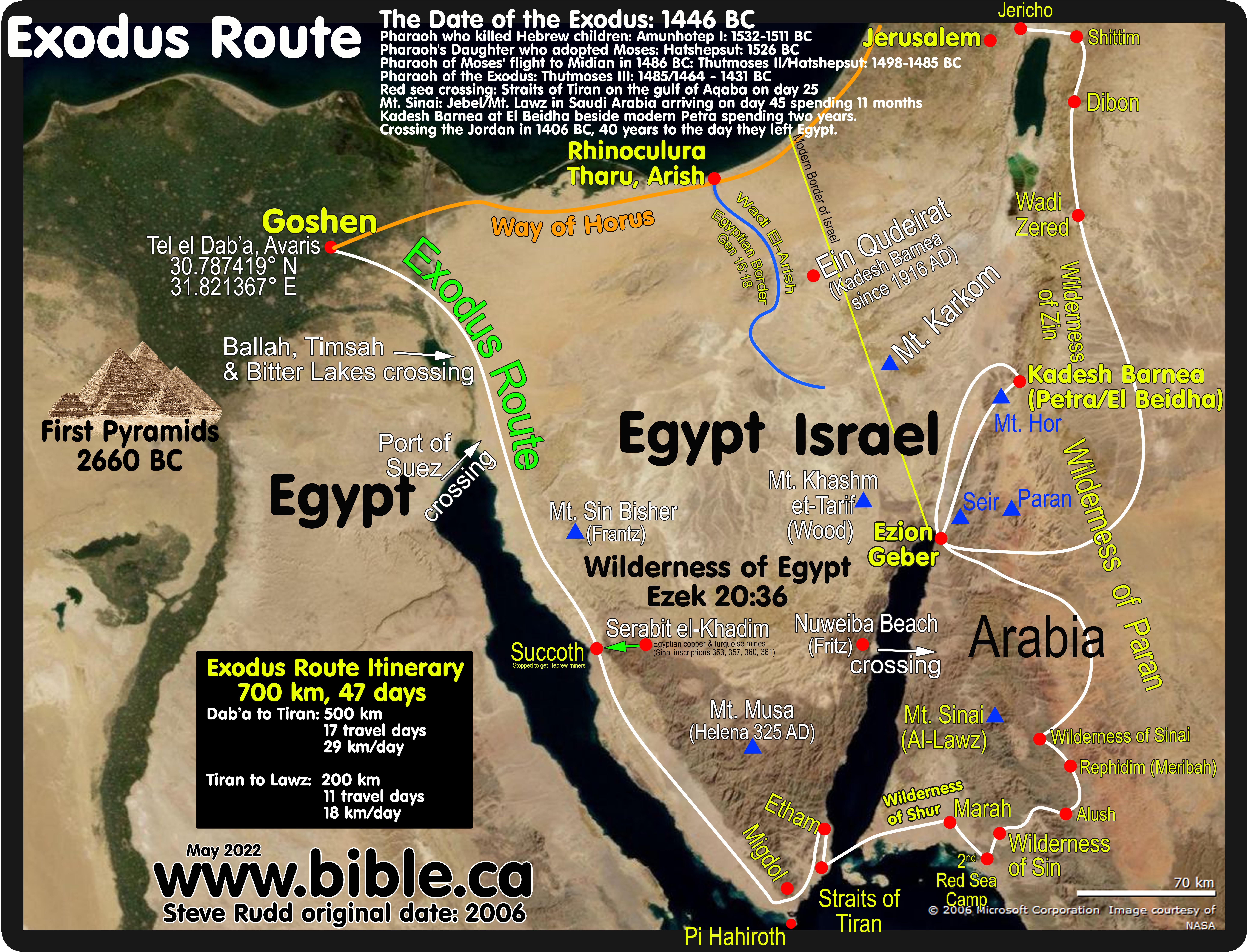
  • During the Exodus from Egypt, It was AT LEAST 20 years BEFORE the Hebrews reached the Red sea.  It wasn't right outside the city gates of Goshen as "Prince of Egypt" leads us to believe.
  • This means that Egypt waited 20 years before attacking, as there is a tremendous amount of proof showing this happened as they were crossing the sea.  The only reason why they attacked at that time is because the Red Sea was the Egyptian border.  Once the Hebrews crossed the border, they would no longer be slaves.  The Egyptian army didn't care about them until they got to this point.
  • Moses waving his wand over the water did not separate the sea.  A leap of faith needed to be taken that Moses did not take.  While the Hebrews were panicking and wailing, Nahshon walked out into the water.  As soon as he got nose deep, the Sea parted.  God required somebody to take a step of faith.

Overview:  At first glance of the old testament, we often don't link it to Jesus.  There is a reason for this that I will introduce shortly below but it is very important to note that while all of the Old Testament stories are occurring, Jesus' ancestors are alive.  Sometimes they are the main character of the stories and sometimes they are in the background, and sometimes they are not even mentioned...but they are still alive and living and dying.

Enter: Hebrew Documents.
As I said in my introduction, there are several things that occured around this time that are not in the Christian Bible.  They are written in Hebrew texts.  The reason why they are not in the Christian bible is because they don't promote Christianity.  Some of you might ask, "Why read it then?".  My answer to you is "It is the catalyst and precursor to the Christian bible.  The state of the Hebrew nation needs to be understood so that we can fully accept our faith in Jesus's walk and accept why he came.

Here are some documents that we need in order to fully understand the Gospel of the new testament:

-Torah: many of us are familiar with.  It contains the following sections:

  • Bereshit (Genesis)
  • Shemot (Exodus)
  • Vayikra (Leviticus)
  • Bamidbar (Numbers)
  • Devarim (Deuteronomy)
      According to the Midrash (see below), the Torah was created and to be used as a blueprint of creation.

-613 Mitzvot: This is the law of Moses.  These are the laws that Moses used to define the newly developed tribes once it was outside of the law of Egypt.  
-Talmud: The written compendium of the Jewish oral law.  It is a compilation of legal debates that was created to define "What is it that God really wants of the Jews?".  Imagine our law system.  Imagine the library in which all of our countries laws and orders are kept.  The Talmud is this:  The constitution and all of the conversations (legal battles) that have defined the culture to be as it is.  It contains 3 sections:
http://www.sacred-texts.com/jud/talmud.htm

  • Mishnah. Written compendium of Jewish oral law: Compilation of legal opinions and debates.  It contains the following sections:
    • Zeraim (Seeds) - Deals with prayer, blessings, tithes, and agriculture
    • Moed (Festival) - Laws of the sabbath and festivals
    • Nashim (Women) - Deals with marriage, divorce, and oaths
    • Nezikin (Damages) - Outlines procedings for civil and criminal law
    • Kodashim (Holies) - Laws regarding sacrifices, the temple, diet
    • Tehorot (purity) - Dealing with the dead, purity of food, purity of the body.
  • Baraita
    • The amendments made to the Mishnah
  • Gemara
    • Legal analysis of the hebrew bible.  This is the ongoing, living document that defines the culture based on the Mishnah.
Why is the Talmud never mentioned in anything that we have learned?  The Talmud does nothing to benefit Post-Christ times.  If you understand those times, you understand that there are Jews (goys) and gentiles.  Jews were the chosen race and gentiles were filth.  The Talmud is written as such and does nothing to promote Christ's message that everybody is invited to God.  Here are some fun, entertaining examples:

-Moed Kattan 17a: If a Jew is tempted to do evil he should go to a city where he is not known and do the evil there.
-Erubin 21b. Whosoever disobeys the rabbis deserves death and will be punished by being boiled in hot excrement in hell.
-Sanhedrin 58b. If a heathen (gentile) hits a Jew, the gentile must be killed.
-Sanhedrin 57a . A Jew need not pay a gentile the wages owed him for work
-Baba Kamma 37b. If an ox of an Israelite gores an ox of a Canaanite there is no liability; but if an ox of a Canaanite gores an ox of an Israelite...the payment is to be in full.
-Baba Mezia 24a . If a Jew finds an object lost by a gentile ("heathen") it does not have to be returned.
-Sanhedrin 57a . When a Jew murders a gentile, there will be no death penalty. What a Jew steals from a gentile he may keep.
-Baba Kamma 37b. The gentiles are outside the protection of the law and God has "exposed their money to Israel."
-Yebamoth 98a. All gentile children are animals.
-Abodah Zarah 36b. Gentile girls are in a state of niddah (filth) from birth.
-Hagigah 27a. States that no rabbi can ever go to hell.
-Menahoth 43b-44a. A Jewish man is obligated to say the following prayer every day: "Thank you God for not making me a gentile, a woman or a slave."

Don't worry.  The Talmud is still accessable, alive and well:

I don't post these in judgement in any way.  I am just posting them to demonstrate that the Talmud is a real living document that has never gone anywhere.  

Now you are probably starting to understand the culture and the idealology that Jesus was pitted against in his ministry.  We will get into more of that later.  I just wanted to ensure that my point is made that the Talmud in no way benefits Christ-followers Post-Christ times, however it adds a great deal of depth to the reason that Jesus was sent.
...You will see me refer to the above at given points during this study.  I feel that they are VERY important to understand the gospel of Christ because we see many amazing things done in the gospel, but we don't fully understand why they are there.  If we know that these documents exist and can read them at any given time, we can see why so many people were blown away by the things that Jesus said.

Get onto the Geneology, already!!!!
Ok.  Now that we got all of that out of the way, let's get onto the good stuff.  Below is the list of the first 14 of Jesus' lineage:
  1. Abraham
  2. Isaac
  3. Jacob
  4. Judah & Tamar
  5. Perez
  6. Hezron
  7. Ram
  8. Amminadab
  9. Nahshon
  10. Salmon
  11. Boaz & Ruth
  12. Obed
  13. Jesse
  14. King David
If you follow the next post, you will learn some VERY INTERESTING things about the time period between Abraham and King David...especially in the timeframe of Egypt.

  • Abraham
    • We all know Abraham.  I'm not going to go too much into him as we have known who he is throughout our lives.  He finally had his son Isaac and was willing to sacrifice him for God.  God rewarded him for his desire to please God.
  • Isaac
    • Survived his fathers willingness to sacrifice him.
    • We all know Isaac
    • Was tricked into giving birthright to wrong child
  • Jacob
    • Stole Esau's birthright.
    • We all know Jacob.  
...Now this is when Jesus' Lineage begins to diverge from the bible stories we all know and love. While the bible follows Joseph, we are going to follow Judah.
  • Judah and Tamar
    • Judah is the brother of Joseph who suggested selling him to the slave traders.
    • Judah was married and had 3 kids - Er, Onan, and Shelah.
    • Tamar originally married to Er (Judah's son)
    • God killed Er.  
    • Tamar was then married to Onan.
    • God killed Onan.
    • Out of fear of losing his last son, Shelah, Judah would not let her marry him.
    • You can see the conflict in which she needed to marry a male from Er's family, but Judah was hesitant to have her marry. 
    • She overcame this conflict by dressing as a prostitute and tricking Judah (Er's father) into having a child with her. 
    • She got twins.
  • Perez
    • First twin to come from the womb of Tamar.  
    • There is nothing else about Perez, other than the fact that he had 2 sons; One of which being Hezron
  • Hezron
    • Youngest to move to Egypt with Jacob.
    • Only appears in geneology lists
At this point, Joseph moved the 4 generations from their place of famine into Egypt.  Jacob, Judah and his brothers, Perez and Hezron.
  • Ram
    • Lived while still in Egypt.
    • Nothing other than geneology lists
It is important to note that there is only one generation that is actually born in Egypt.  It has been identified that Moses came 2 generations after Joseph.  On Jesus' side, there was only one generation born in Egypt.  There is a pretty big time gap or people missing from the geneology at this point.  It could be quite easy for geneology members to be missing as it could be very difficult to get a sensus during slavery to Egypt.
  • Amminadab
    • Born during exile from Egypt.
  • Nahshon
    • The initiator who caused the Red Sea to part.
    • His sister married Aaron, which led to Aaron's fame - "One should select a wife who's brother is noble."
    • Did not survive into the promised land
    • Appointed by Moses to lead Judah.
Nahshon is the point in which the stories come back together.  He is not mentioned in the Christian bible, however he is the reason why Jesus' lineage was brought up to be Kings.  He is mentioned in the Gemara, and this is the act that made him Tribe-Leader worthy.

Nahshon is seen in Jewish religion as a David and Goliath character.  He stepped into the sea in faith when nobody else would.
http://www.amazon.com/Nachshon-Who-Was-Afraid-Swim/dp/0822587653
Here are the Midrash to translate:
http://realiajudaica.blogspot.com/2011/04/nachshon-ben-aminadav.html

You will note that Nahshon's father, Amminadab was born on the exile.  Since Nahshon is the one who separated the Red Sea, that means that there were 2 generations (conservatively 20+ years) between the exile from Goshen to crossing the red sea.  The Egyptian Army didn't attack the escaping jews for 20 years and that was only because they reached the Egyptian border. 

Most people believe the "40 years lost in the desert" was because they were somehow inept in finding their way.  We need to remember that the Philistine Land was due East of Goshen.  A homeless nation with no resources and embedded elders, women, children  would not be able to cross through that land peacefully or through war with success.  It was important for the Hebrews to route completely around the Philistine land.  This would take 40 years regardless of whether they had a God GPS or not.

I really want to point this out because it is a common misconception (Thanks to "Prince of Egypt" and Charlton Heston) that the Hebrews were attacked as soon as they packed up and left Goshen.  This opens the case up for skeptics to say the Red Sea crossing was at a lot of places in which it wasn't.
This point in Jesus lineage SHOULD eliminate Biblical skeptics who say they crossed at Bitter lake or the Point of Suez.  Not only that, but the mentioning of the wilderness and towns between Goshen and the Sea Crossing.

-Based on the actual time frame, it makes this "Red Sea Crossing" Much more likely and realistic:

I agree that is a valid place in which the Hebrews crossed.  It also validates the Egyptian Army's eagerness to head them off at this point.  If the Hebrews crossed the Egyptian border, they would no longer be slaves to the Egyptians.  The Army attacking was a last-ditch effort by the Egyptians to keep them from crossing the border (lined by the sea) and becoming "free resources".


  • Salmon & Rahab
    • Nothing mentioned of him other than he fathered Boaz.
    • Rahab was prostitute living in Jericho.  Her life was spared as she hid spies in her house to help it be overthrown.  She was promised she would be saved.
    • Not the same Rahab as in the Talmud.
  • Boaz & Ruth
    • Became rich land owner
    • A man for the people.  Very upright and looked out for everybody.
    • Ruth was married to Mahlon. Mahlon and his brother were killed.  Mahlon's father (Naomi's husband) was dead.  She was left without a husband along with Naomi.  She and Naomi were widows with no family.
    • First in the lineage to be a foriegner. First in lineage to be converted to Judaism.
    • Gave birth to Obed
  • Obed
    • There is nothing about Obed, other than him being the grandfather of David.
  • Jesse
    • Farmer, Breeder, Sheep owner.
    • Had 8 sons.  David was the youngest.
  • David
    • King David is the pivotal character in Jewish, Christian and Islamic Doctrine.
    • "A direct descendant of David will be messiah"
    • Killed Goliath
    • Wanted to build a temple for God.
So that is Jesus' lineage from Abraham up through the first Kingdom. 


Introduction to Matthew

This post is to outline my journey into Matthew.  I am going about this study completely objectively to see what I can REALLY extract out of the scriptures to help me grow in my relationship with God.

Very Important Things that I learned here that are not taught in church:

  • There is no proof that the book was written by Matthew.  There is no proof to fight it, however from an objective standpoint, it is safe to say the author is "anonymous".  For the sake of my studies, I am still going to call the author Matthew.  I will be presenting enough challenging things in these studies and I don't want people who struggle with content to also struggle with possible author inconsistencies. 
  •  The book of Mathew (See?  That is easier to read than "The book of an unproven anonymous author) drew it's information from 3 sources:
    • The Gospel of Mark
    • The Q Source (see below)
    • "Matthews" recollection
The Q Source is the name that they give to a collection of stories of Jesus.  Since several of the gospels have similar stories of Jesus that are narrated in such a similar fashion, it is assumed that the stories were extracted from a pool of stories.  

Both Matthew and Luke create their gospels from the Book of Mark, the Q Source, and personal interaction.  I point this out because it may be found more beneficial to have new followers directed to the Book of Mark or the Book of John to get information on Jesus' life.


In-Depth Study of the Gospel: Introduction

This year, I decided to go through the Gospel of the bible in a very detailed format.  I wanted to make sure that I clearly understood the meaning of every scripture and why it is in there.

A friend suggested that I start a blog to document everything.  I find this kind of hard because it sometimes it will be hard to write everything down and sometimes I won't want to rewrite

I believe the bible is God's divine truth.  I believe the Gospel is the most important part of the bible.  Because of my belief in that, I should not find any inconsistencies.  Unfortunately, when I do read the gospel there are inconsistencies.  Did Jesus just walk up to the "pre-apostles" at their boat to talk to them, or did he collect them one by one?  Did Jesus take the wine from the sponge while being crucified or not?  How come Jesus' lineage is so different the two times it is mentioned in the Gospel?

Normally people with questions are looked down upon for "Questioning the Bible".  If a person asks these questions, then their faith is not where it should be and they need to "trust" God.

Maybe God created me differently, but I feel sticking my fingers in my ears and closing my eyes is not trust...it is just stupid.  I would say that a fair amount of people will never understand the true meanings in the bible and all because they don't want to question anything in it.

I believe the Bible is divinely inspired and I believe that any questions that I have will be answered.  I don't have any doubt that God will answer my questions and I hope that the things that I learn will bring more inspiration to my own faith as well as others.

Some people might read that and see me as a man of doubt.  I would like to change that way of thinking.  I am a man that has so much faith that all inconsistencies will be explained.  I would also challenge others to ask hard questions about the bible.  If your faith is strong, it should not be tangled.

So needless to say, I am going verse by verse ensuring that I understand the meaning behind everything that is being taught.

Throughout this blog, you may find me noting several Non-Biblical texts.  Although your first reaction may be "How can I trust it if it is not in the bible?".  My response will be, "The bible didn't exist until after the Gospel happened.  While the Gospel was happening, there were other texts in which the people lived by.  In order to understand the circumstance in which Jesus lived and fought, we need to understand the culture and the reason why he said the things he did.".

I will be referencing several hebrew writings.  It should be heeded as good information as it is the climax of Jesus' ministry and the precursor to the good news in which we refer to as Salvation.

First stop:  Matthew 1:1...The Geneology.


Tuesday, June 19, 2012

"Breaking the Law" reading notes

Matthew 15:8-9
“‘These people honor me with their lips,
but their hearts are far from me.
 They worship me in vain;
their teachings are merely human rules.  ”


Any institution has to come to some "ground rules" on how it's participants should be handled.  Churches are no different.  Specific teachings are required so that outsiders can make a decision about it. Unfortunately, in some churches, it is difficult to determine if these "convictions" are of God or of man.  Looking at this scripture, this can cause a great deal of conflict in the operations of the church.

What teachings in your church are of God and what teachings are of institutional structure?

Jesus was proof that God is not predictable.  The existing church before Jesus felt they had God pegged.  They knew how to act, how to worship, what to do...Very much like some churches feel today.  They create a doctrine based on what they think they've got nailed down...But God proved that he doesn't work that way.

1) If an idea is about self (or group) preservation, it is from human
2) If an idea is intended to control or corral a thought process, it is from human
3) If an idea is self-serving, it is from human
1st John 1:5-6
4)If an idea is about love and light, it is from God
5)If an idea is about propelling a person toward worship and love, it is from God
6)If an idea is about pursuit of God's truth, it is from God.
7)If an idea is about sacrifice and helping others, it is from God.

God is completely unpredictable.  If we try to love him in an institutionalized fashion, we have failed.  No church or group of people can completely house the understanding of God.  If one says that they can, then they don't fully understand the scriptures laid out before them.

Luke 15:25-30
-Which son recieved the robe and the party?  Why?
-Why was the older brother angry?
-In your relationship with God, do you see yourself following rules and man-induced laws and concepts?  Or are you throwing off everything to rebuild a relationship with God?

It isn't an intentional thing...It is an act of nature. Every institution (churches, stores, restaurants) try to provide you the best product in the best way that they know how.  And in their defense, for the most part, they do a great job. 

Unfortunately, for a church, it must always remain on its toes.  It is very easy for human precepts to step in and decide the "order of things".  Unfortunately, churches can not talk to God directly so they must be very flexible and be ready to try new things and fail.  If a church ultimately trusts in God, then they should be able to accept failure in anything they do.  That is the entire basis of trusting...accepting failure prior to stepping out.

You can tell a church that is actively seeking to understand God.  NOT THE PARTICIPANTS, BUT THE CHURCH ITSELF...You can tell this by them being dynamic in everything they do, and loving of all people who stick with them.